



Somebody in your house is going to beat you at this game it’s not going to be you. Memory games are one of the few places where a preschooler’s brain genuinely has the edge. Let them have their moment.
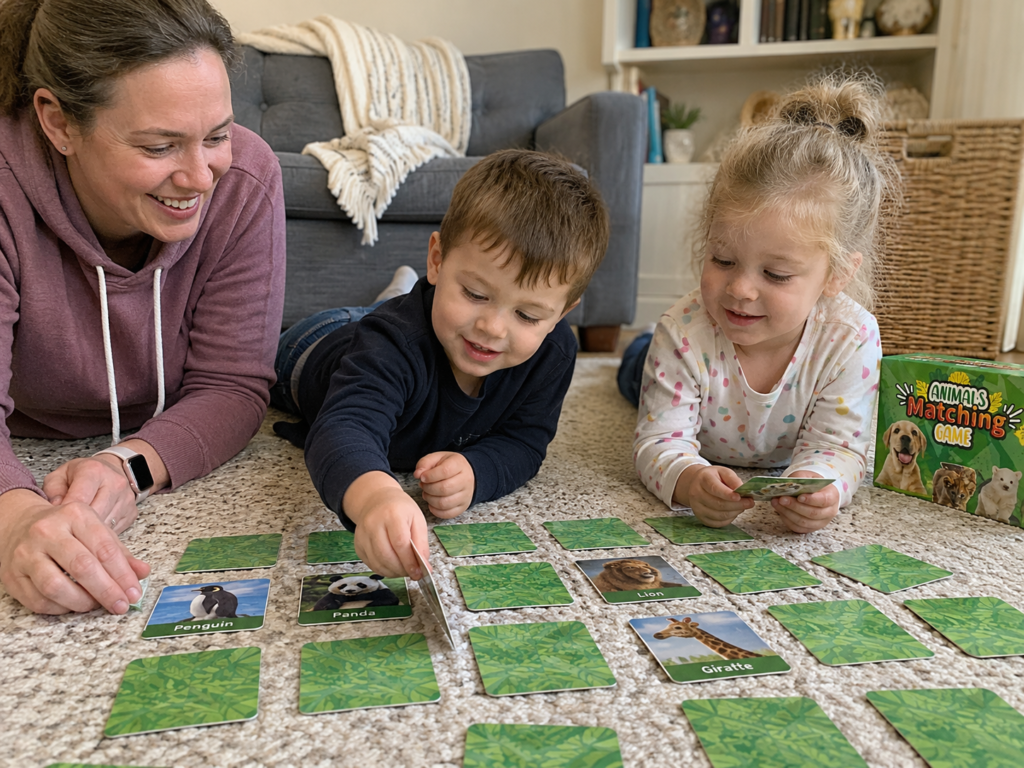
Lay out an animal matching set face-down in a grid on the floor or table. Take turns flipping two cards at a time, trying to find a pair. Keep the match if you find one and go again; if not, flip them back and pass the turn. Whoever collects the most pairs wins — or, more accurately, whoever hasn’t melted down about losing yet wins, and that’s a perfectly fine way to define “winning” at this age.
This one earns its spot as an actual family game, not just a kids’ activity because grown-ups genuinely lose sometimes. A four-year-old with a sharp memory for where the elephant card was three turns ago will absolutely beat an adult who wasn’t paying attention. That’s not a participation-trophy win. That’s a real one and preschoolers know the difference.
Start with a smaller grid for a first round, then build up. Once basic matching feels easy, here’s where the same deck turns into a few different games without buying anything else — see “Extend the Play” below.
A note on mess and cleanup: it’s cards. Scoop them back into the box, done. This is about the lowest-effort cleanup on this entire site.
This post contains affiliate links. If you shop through them, Parent + Play may earn a small commission at no extra cost to you. Read our full disclosure.
Use What You Already Have:
- A table or open floor space
Buy One Thing: Animal Matching Memory Card Game, Preschool-Friendly Get it on Amazon
Adapt It (Younger/Older):
For a younger toddler, shrink the grid down to just 6-8 cards (3-4 pairs) so the game doesn't outlast their attention span, and let them peek a little longer before flipping back. For an older preschooler close to kindergarten, use the full deck and add a simple rule that they have to say the animal's name out loud before claiming the match.
🎓 Why This Helps with the Transition to Kindergarten
Kindergarten classrooms run on turn-taking and rule-following, and memory games practice both directly. Waiting for your turn without grabbing, following a fixed set of rules, and handling losing a round gracefully are exactly the classroom behaviors teachers spend the first weeks of kindergarten building. This game builds them at home first.
Extend the Play:
1. Sound match: Make the animal's sound instead of saying its name when you find a pair.
2. Speed round: Set a timer and see how many pairs the whole family can find together before it runs out.
3. Solo sort: Skip the memory part and just have them sort every card into pairs, laid face-up, for younger or newer players.
Questions to Ask:
"Which animal do you think we'll find next?"
"How did you remember where that card was?"
"What sound does this animal make?"
Activity Type: Games & Family Challenges
Age Range: Pre-K
Effort & Budget: One-Purchase Activities Under-$20
Skill/Developmental Focus: Early Math Social-Emotional Transition to Kindergarten